Tuesday, 25 June 2024

The Adventure of Wholock: When Dr Who meets Sherlock Holmes!

 On a foggy London evening, in a dimly lit study filled with the scent of old books and freshly brewed tea, Sherlock Holmes sat in his armchair, fingers steepled under his chin. Dr. John Watson was nearby, perusing the latest edition of the London Times, when a knock resounded through 221B Baker Street.


"Expecting anyone, Holmes?" Watson asked, glancing up.


"Not particularly," Sherlock replied, his eyes narrowing. "But I have a feeling this visitor will be most intriguing. Would you mind getting the door, Watson?"


Watson set down his paper and opened the door to reveal a peculiar figure. Dressed in a long, flowing coat and a bow tie, with an air of frantic excitement, stood a man who looked out of place even by Victorian standards.


"Hello!" the stranger said, stepping inside uninvited. "I'm the Doctor. And you must be Dr. John Watson."


"How do you know my name?" Watson asked, taken aback.


"Ah, it's all in the history books. Well, my history books, at least. And you," the Doctor continued, turning to Sherlock, "must be Sherlock Holmes. I've heard so much about you!"


Sherlock, always one for curiosity, raised an eyebrow. "And who might you be, exactly?"


"I'm the Doctor. Just the Doctor. And I need your help."


Watson shut the door, still bewildered. "What kind of help do you need?"


"There's been a series of... accidents," the Doctor said, emphasizing the last word in a way that suggested they were anything but accidental. "I've traced the anomalies to your timeline, specifically to London. And I think there's something very unusual behind them."


Sherlock leaned forward, intrigued. "Go on."


The Doctor produced a small device from his pocket, buzzing and glowing with an otherworldly light. "This is a sonic screwdriver. It detects energy fluctuations and disturbances in the fabric of time and space. Recently, it's been going haywire near certain accident sites."


"Interesting," Sherlock mused. "And you believe these accidents are linked by something other than chance."


"Precisely," the Doctor said. "I suspect someone—or something—is manipulating physics to cause these incidents."


Watson, ever the pragmatist, asked, "And what exactly do you expect us to do?"


"I need your deductive skills, Mr. Holmes. And your medical expertise, Dr. Watson. Together, we can figure out who's behind this and stop them before more people get hurt."


Sherlock stood, his eyes gleaming with excitement. "Very well, Doctor. Where do we begin?"


---


The first accident site was a collapsed building in Soho. The Doctor, Sherlock, and Watson arrived under the cover of darkness, avoiding the eyes of curious onlookers and police.


"According to my readings," the Doctor said, pointing his screwdriver at the rubble, "there was a massive energy surge just before the building came down. Not an explosion—more like a gravitational anomaly."


Sherlock examined the debris, his keen eyes noticing details others would overlook. "Watson, look here. The way these beams have twisted and bent... this wasn't caused by a simple structural failure. It's as if some force pulled them apart."


"Like a localized gravity field," the Doctor confirmed. "Someone is using advanced technology to manipulate physical laws."


"But who could possess such technology?" Watson wondered aloud.


The Doctor's face grew serious. "There are many beings and entities that could. Aliens, time travelers, even rogue scientists. But we need more data to narrow it down."


---


Their investigation led them to an abandoned warehouse by the Thames, where the Doctor's sonic screwdriver detected another anomaly. Inside, they found a makeshift laboratory filled with strange devices and notes scribbled in a language none of them recognized—except the Doctor.


"Gallifreyan," he muttered. "Time Lord technology. This is far more serious than I thought."


"Time Lords?" Watson echoed, confused.


"My people," the Doctor explained. "Brilliant, but some of them can be quite dangerous."


As they examined the lab, Sherlock pieced together the clues. "This equipment is designed to manipulate gravitational fields, much like the anomalies we've seen. But why target random buildings?"


"Perhaps as a test," the Doctor suggested. "Or to cause chaos and distract us from their true goal."


Suddenly, they were interrupted by a voice. "Well, well, Doctor. Sherlock Holmes. Dr. Watson. You've found me."


From the shadows emerged a tall figure in a dark coat, his eyes cold and calculating. "I am the Master. And this is just the beginning."


The Doctor's face hardened. "Master. I should have known."


"What does he want?" Watson asked, standing ready.


"The same thing he always wants," the Doctor replied. "Power, control, and to outsmart me."


The Master smirked. "And it seems I'm succeeding. But you're too late to stop me. The next anomaly will occur in minutes, and there's nothing you can do."


Sherlock's mind raced. "Doctor, where is the nearest potential target?"


The Doctor quickly scanned his device. "The Tower Bridge. We need to get there, now!"


---


They arrived just as a swirling vortex of energy began to form above the iconic bridge. The Doctor and the Master faced off, sonic screwdriver against a similar but more sinister device.


"Sherlock, Watson, you need to disrupt the field generators on either side of the bridge!" the Doctor shouted.


As the two raced to the bridge's supports, dodging waves of distorted gravity, Watson used his medical knowledge to stabilize his movements, while Sherlock's keen observation helped him identify the weak points in the Master's devices.


Working together, they managed to disable the generators just as the vortex reached critical mass. The energy dissipated, and the bridge held firm.


"You've lost, Master," the Doctor said, breathless but triumphant.


"For now," the Master replied with a sinister smile. "But I'll be back."


As the Master disappeared into the shadows, the Doctor turned to his new friends. "Thank you. I couldn't have done it without you."


Sherlock nodded, already analyzing the events in his mind. "An intriguing challenge. I look forward to our next encounter, Doctor."


"And I," the Doctor replied with a grin. "Until then, stay curious, my friends."


With that, the Doctor disappeared into his TARDIS, leaving Sherlock and Watson standing on the bridge, the night once again still and silent.


"Well, Holmes," Watson said, breaking the silence, "I suppose we have a new mystery to ponder."


"Indeed, Watson," Sherlock replied, eyes gleaming. "Indeed."

Friday, 20 January 2023

Reflecting on a Year of Change: Lessons Learned in 2021

The year 2021 will go down in history as one of the most challenging, yet transformative years of our lives. From the ongoing COVID-19 pandemic to the social and political upheaval that took place, it's been a year of unprecedented change.


Credit: Copyright: Titirag Damjunch | Dreamstime.com


The pandemic forced us to re-evaluate the way we live our lives, and many of us have had to adapt to working and learning from home. The isolation and uncertainty of the past year has taken a toll on our mental and emotional well-being, and it's been a reminder of how important it is to have a support system in times of crisis.

One of the most significant lessons we've learned in 2021 is the importance of resilience. We've had to find ways to cope with loss, uncertainty, and fear, and we've had to be creative and resourceful in order to navigate these challenges.

Another important lesson we've learned is the importance of empathy and compassion. The pandemic has affected different communities in different ways, and it's been a powerful reminder that we're all in this together. We've seen people come together to help one another, and we've seen acts of kindness that have restored our faith in humanity.

The social and political upheaval of 2021 has also reminded us of the importance of standing up for what we believe in. We've seen people from all walks of life come together to fight for justice and equality, and we've seen the power of collective action to bring about change.

As we look to the future, it's important to remember the lessons we've learned in 2021. We've been through a lot this year, and we've learned that we're stronger than we ever thought possible. We've also learned that we're all connected, and that our actions have the power to make a difference.

Let's take these lessons with us as we move forward, and let's continue to support one another as we navigate the challenges ahead. Together, we can create a better future for ourselves and for generations to come.

Wednesday, 28 December 2022

Einstein's relativity without equations

 Albert Einstein's theory of relativity is a theory of how space and time work, based on the idea that the laws of physics should be the same for all observers, regardless of their relative motion. There are two main parts of relativity: special relativity, which deals with objects moving at a constant speed in a straight line, and general relativity, which deals with objects moving at any speed and under the influence of gravity.

One of the key concepts of relativity is the idea that time and space are not separate, fixed entities, but are rather part of a single, four-dimensional "fabric" called spacetime. This means that the way we experience time and space can be affected by how fast we are moving or how strong the gravitational forces around us are.

One of the most famous predictions of relativity is the idea that time appears to pass more slowly for objects moving at high speeds or in strong gravitational fields. This effect, known as time dilation, has been confirmed through a variety of experiments and is now an accepted part of modern physics.

Another important prediction of relativity is the concept of mass-energy equivalence, which states that mass and energy are interchangeable and can be converted into each other according to the equation E=mc^2. This equation has far-reaching consequences and has been used to explain a wide range of phenomena, from the behavior of subatomic particles to the energy output of nuclear reactions.

Despite the complexity of relativity, its ideas and predictions have been thoroughly tested and have stood the test of time, making it one of the most important and influential theories in all of science.

Summary of rich dad and poor dad book

 "Rich Dad, Poor Dad" is a personal finance book written by Robert Kiyosaki that compares and contrasts the financial teachings and experiences of Kiyosaki's "rich dad," who was his friend's father and a successful entrepreneur, with those of his own "poor dad," who was a highly educated but financially unsuccessful school teacher.

The book begins with Kiyosaki's childhood and how the lessons he learned from his two fathers shaped his approach to money and business. His "poor dad" had a traditional view of success, believing that getting a good education and a high-paying job was the key to financial security. His "rich dad," on the other hand, encouraged Kiyosaki to think creatively and to see money as a tool for building wealth rather than as a means to an end.

One of the main themes of the book is the importance of financial literacy. Kiyosaki argues that most people are not taught how to manage money effectively and are therefore at a disadvantage when it comes to building wealth. He stresses the need for individuals to educate themselves about money and to take control of their own financial futures.

Another key theme is the importance of building passive income streams. Kiyosaki advocates for the use of assets such as real estate and businesses to generate income, rather than relying solely on a job or salary. He also encourages readers to diversify their investments and to be willing to take calculated risks in order to achieve financial independence.

The book also covers the dangers of relying too heavily on traditional sources of financial security, such as savings accounts and 401(k) plans. Kiyosaki argues that these types of investments are not sufficient to achieve financial freedom and advises readers to take a more proactive approach to their finances.

Overall, "Rich Dad, Poor Dad" is a practical guide to financial literacy and building wealth that challenges traditional notions of success and encourages readers to take control of their own financial futures.

Quantum Information

 Quantum information is a branch of physics that studies how information can be encoded, transmitted, and manipulated using the principles of quantum mechanics. It is a rapidly growing field that has the potential to revolutionize many aspects of modern society, including computing, communication, and security.

At its most basic, quantum information involves the use of quantum states to represent and process information. In classical information theory, information is typically encoded in bits, which can take on only two values: 0 or 1. Quantum bits, or qubits, on the other hand, can exist in a superposition of both 0 and 1 at the same time, allowing them to perform multiple calculations simultaneously. This property, known as quantum parallelism, makes quantum computers much faster and more powerful than classical computers for certain types of problems.

One of the key principles of quantum mechanics is the concept of entanglement, which refers to the ability of two or more quantum particles to become interconnected and influence each other's behavior, even when separated by large distances. This phenomenon has been demonstrated in numerous experiments and has important applications in quantum communication, including the ability to transmit information securely without the risk of interception.

Another important aspect of quantum information is the concept of quantum error correction, which is used to protect quantum states from noise and other types of errors that can occur during the transmission or processing of information. Quantum error correction codes can be used to detect and correct errors, allowing quantum systems to operate with high reliability and accuracy.

Quantum information has the potential to revolutionize many aspects of modern society, including computing, communication, and security. In computing, quantum computers have the potential to solve problems that are currently intractable for classical computers, such as factorizing large numbers and searching large databases. In communication, quantum systems can be used to transmit information securely, without the risk of interception. And in security, quantum systems can be used to create unbreakable codes and secure communication networks.

Despite the promise of quantum information, there are also challenges and limitations to its practical implementation. One of the main challenges is the fragility of quantum states, which can be easily disrupted by external factors such as noise and temperature. This makes it difficult to maintain the coherence of quantum systems over long periods of time and to scale them up to larger sizes.

Another challenge is the difficulty of building and controlling quantum systems, which requires specialized equipment and expertise. Quantum computers, for example, require complex and expensive hardware, and their performance is often limited by the number of qubits that can be controlled.

Despite these challenges, researchers and developers are making rapid progress in the field of quantum information, and it is likely that we will see significant advances in the coming years. As the field continues to mature and the technology becomes more practical and widely available, it has the potential to transform many aspects of modern society and pave the way for new and exciting applications.

Is AI more dangerous than nuke? [As answered by AI itself]

 It is difficult to definitively say whether artificial intelligence (AI) is more dangerous than nuclear weapons, as both have the potential to cause significant harm if they are not used responsibly.

Nuclear weapons are incredibly destructive, with the ability to cause widespread destruction and loss of life on a scale that is almost unimaginable. They also have the potential to create long-lasting environmental damage and destabilize international relations. However, nuclear weapons are also heavily regulated and controlled, with strict protocols in place to prevent their use except in the most extreme circumstances.

AI, on the other hand, has the potential to cause harm in a more subtle and insidious way. While AI systems can be used to automate tasks and make our lives easier, they also have the potential to perpetuate bias, make decisions that have unintended consequences, and even be used for malicious purposes. The potential risks of AI depend on how it is developed and used, and it is important for researchers and policymakers to consider these risks carefully.

In conclusion, both nuclear weapons and AI have the potential to cause harm, but the risks and consequences of their use differ significantly. It is important to approach both technologies with caution and to ensure that appropriate safeguards are in place to mitigate the risks they pose.

Tuesday, 27 December 2022

The AI which might replace google? About ChatGPT (OpenAI) written by ChatGPT

 Chat GPT is a variant of the GPT (Generative Pre-training Transformer) language model that is designed specifically for generating text in the context of chatbot conversations. Chat GPT has been trained on a large dataset of human chat conversations, so it is able to generate text that is appropriate and natural-sounding for chatbot interactions.

One of the main advantages of chat GPT is that it is able to generate text that is personalized to the user and the context of the conversation. For example, if a chatbot is having a conversation with a user about their favorite movies, chat GPT can generate responses that are tailored to the user's interests and preferences, rather than simply providing generic responses. This can make chatbot conversations more engaging and personalized for users, which can improve the overall user experience.

Another advantage of chat GPT is that it is able to generate text that is coherent and flows naturally, which is important for maintaining the flow of a conversation. In contrast to some other natural language processing models, chat GPT is able to generate text that is relatively free of errors and typos, which can make chatbot conversations more natural and enjoyable for users.

In addition to generating text, chat GPT can also be used to classify chat messages and understand the intent behind them. For example, chat GPT can be used to determine whether a user's message is a question, a request for information, or a simple greeting. This can help chatbots respond more appropriately and effectively to user messages, and can also improve the overall efficiency of chatbot conversations.

Overall, chat GPT is a powerful tool for generating text in the context of chatbot conversations, and it can be used to improve the naturalness and effectiveness of chatbot interactions. It is just one of many techniques that can be used to build more sophisticated and effective chatbots, and it has the potential to revolutionize the way we interact with chatbots and other artificial intelligence systems.

Monday, 9 March 2020

Effect of COVID-19 Coronavirus Outbreak in Bengaluru India

The first positive test confirmed on 9/March/2020 at Namma Bengaluru. The government has ordered holidays for primary school children (up to 5th grade) till 31st March. The market of India is getting better as oil prices are shooting down because of this effect. But the media is scaring people more, which is creating more panic for people to buy surgical masks, not even N 95 mask. And the doctors with different background are giving random statements related to the type of mask that has to be used. If the number of outbreak goes big with respect to our population, the government probably does not have enough ICU's nor oxygen supporting machines. The government says they have bed's in open isolation room, and they are not providing proper gear for the doctors to fight this pandemic, this does not make any rational sense! When government says don't panic we obey it, but they have to provide us the proper statistics that we have to actually fight this pandemic, not just the number of beds available, which is also lower in number compared to our population. Hence, we the people should take precautionary measures and educate about the safety tips to poor people specially, who does not have any facility and depends totally on government hospitals.

Image result for coronavirus in bangalore
Picture Credit: The Hindu


Please pass on the safety tips via word of mouth, which works more efficiently.

Friday, 28 February 2020

Rock dependent extreme microbes that could potentially survive outside our solar system

We recently published a paper in the journal of life, MDPI publishers, which is a scopus indexed journal. Here we have used the indexing metric tool and adjusted its weight exponents mathematically, to check if extreomophiles or microbes which are rock dependent, that could potentially survive on rocky exoplanets.
Exoplanets are basically planets outside our solar system, similar work of tardigrade microbe (or extremophile) was done by our team and it is published in Life sciences in space Research journal, Elsivier publisher. As tardigrade is a water extremophile that could potentially survive on water composition exoplanets.
In order to learn more about this and to know about the names of the rocky extremophiles, read from the link below of the open access journal.


We have obtained some interesting results:
https://www.mdpi.com/2075-1729/10/2/10

Saturday, 26 October 2019

Diwali the festival of lights: Turns air to poision

The awareness created about air pollution in India is not enough to protect our atmosphere. Some people don't care about atmosphere as their children will miss out on something special in life if they don't burn crackers. The Air Quality Index shows shocking results in metropolitan cities, if we don't protect mother nature now, then slowly India will become in-habitable for human beings. We Indians are so much resilient to keep Kashmir as a part of India, we have to show similar patriotism to protect our cities. Imagine one day when Delhi or Bengaluru becomes in-habitable to  human beings, the population that has to migrate is huge. The awareness program from government is not enough to reach the entire middle class and we are not seeing a huge change like no crackers anywhere in the cities.


Solution: It is high time for the central and state governments to bring a policy to ban crackers manufacture in India, and give alternate jobs to cracker business people.

Tuesday, 4 June 2019

Karnataka's funny politics 2019

Bengaluru the capital city of Karnataka is the hub of political games after the general elections 2019 results.  Here the friendship government of congress and JDS parties are running the government in a most funny way imaginable. The sleepy congress old man called by the name Siddaramaiah is playing double games to get back to the power. <my question is; if he is physically incapable of being attentive in important meetings, why can't papu (i.e. Rahul Gandhi) send him home>. On the other side the weeping seedless drama queen from JDS, who is suffering to stand up for what he believes in, is the current chief minister of Karnataka. After the heavy defeat of friendship government against BJP the unsatisfied ministers from either sides of friendship government are planing to bring the government  down  any moment. In the process of this mess and in built corruption of congress history suggests no quality work is done, and the state government has not done anything to uplift the employment rate, but strongly points finger against the central government relating this issue.

This topic can point out lot of loop holes and I don't want to bore my blog readers with a huge article. So kindly leave a comment if you want more :)

Tuesday, 7 May 2019

Toll and fare problems with OLA / UBER cabs

Drivers from the major cab services like OLA and UBER are charging toll fare twice from the public with no reason. The app does not have an option to say the toll is included, so these drivers mercilessly charge the customers. Since the app is charging as its included and the driver is also charging, so twice, the drivers make up their own rules related to toll.


Secondly, the app shows a lot of variation on the charges  <especially when it rains>. The cab charge from electronic city to airport is twice that of the air fare from Bangalore to Delhi. This customer betrayals has to be stopped and the policy on charges should be fixed and has to be transparent. These cab services should not play with customers situation and apply more charges accordingly, if they do so the motivation behind the OLA founder goes around a deep shit!

As a customers we should appeal to the Karnataka government, to resolve this issue, and this should come under some kind of a punishable cheating act.

Saturday, 20 April 2019

Digital NOMAD

What is digital NOMAD?

These people travel from place to place, and use only digital platforms to earn money.


Warning!
Travelling experience makes the whole world an work place, even though it sounds like the dream come true its not easy. You can earn money on YouTube, blogger and other ways online, but its not stable.


Planning required to be a digital NOMAD:

1) Necessary travelling Visa documents: you get only tourist visa.

2) Better cook your own food

3) Book cheap places in the surrounding to stay.

4) Find a motivating work space with wifi

5) If you make any saving find suitable investment plan for your retirement.

6) Keep a track of currency valuation from country to country.


How much an average digital NOMAD earn?

About 500 to 800 Euros a month...

Wednesday, 10 April 2019

Short Note: Black hole image released on 10/04/2019 (EHT)

Astronomers breakthrough imaging of a black hole via Event Horizon Telescope, with a big collaboration has been successful. 
What is a basic black hole ?
A black hole is basically a huge massive dead star, surrounded by a huge accretion disk of gas and dust, which travels close to speed of light. In the black hole gravity is so large not even light (which has zero mass) can escape from it. The surface of the back hole is called event horizon (point of no return), beyond which you see a burning ring in the picture below, this is called photon sphere (basically a shadow of light), caused by bending of light around the heavy objects in space-time (or gravity being space time curvature -> which is Einstein's General Theory of Relativity). 

picture credits : EHT

The black hole targeted is located in a galaxy called M87, which is billions and billions of kilometer away fro us. The mass of this monster black hole is 6.5 billion times that of our sun. This photograph was taken by a network of 8 telescopes and has proved Einstein's 100 year old general theory of relativity is correct yet again!

Thursday, 10 January 2019

Bias related to DEEMED University in India!

Deemed university is a status of autonomy granted to high performing institutes and departments of various universities in India. It is granted by the University Grants Commission (UGC) of India. Karnataka has 15 deemed universities, the major DEEMED universities are IISc, IIITB, Christ, Jain, ...etc.
(For confirmation of these deemed universities -> go to official UGC website and check the list of deemed university in Karnataka).

There is some fake news flying around: "The PhD degree awarded from deemed university is not good enough to get a government job?".

Then the PhD awarded from a world class university like Indian Institute of Science (IISc) should also be considered useless for government jobs as well?

I wanted to clear the doubt's for students studying in deemed universities, not to worry about the fake news spreading by random people, who would not know the head or tail of actual PhD research. If you get a degree from Bangalore University (BU) it takes 7 years or more even if you do good work, and we have to go across lot of corruption before finishing the degree. Some of the professors treat you as slaves, and most people quit because of harassment! Students say the experience of doing PhD at BU is horrible which includes cast-ism. Also we have heard in the media that: writing the god's name on the top of the answer script was the code of information to get passed at BU.
Looking at these above BU reports one would like a peaceful place to do PhD. If anybody challenges the quality of the PhD work done at deemed or private universities (in 3 or 5 years); then you can ask them to check the Scopus index author profile of the research scholar, which is maintained by Elsevier publishers, to understand the quality of work published by the scholar related to his/her PhD list of publications. If the PhD work is published in a Scopus based journal, then the work is of high quality and UGC would have already recognized it, but it is not so easy to publish in Scopus . Keep in mind without hard work  nothing can be done, so smart and hard work could get you published in Scopus.

The major private universities in Karnataka are PES, REVA,...etc. are equally good too, but not deemed universities yet! also beware of some fake universities which are neither private nor Deemed, the details can be found on official UGC website.


Monday, 19 November 2018

Astronomy v/s Astrology

Astro means star, whereas nomos means  "arranging, regulating" and logia means "treating of". Hence astronomy is understanding star arrangement and astrology is treatment of humans based on star arrangement. But astronomy evolved as a branch of science after this Greek etymology description. 


Why astrology is wage ?


a) It blames its own input data interpretation, no twins born under same stars can have same life. No proper conclusive evidence of error propagation for further conclusion is seen on this case study.


b) The description solution is so wide it would cover the asked question to be both true and false.


c) It always says astrology is backed up by ancient mathematics, but back then Geo-centric model was used. But no clear justification is given by the astrologers, what happens to the differed prediction of Geo-centric and Helios-centric models.

d) No proper classification of celestial objects. Astrologers say it covers entire universe, if so what about the multi-verse ? 

Note: Multi verse is still a working theory in science.


Garbage Maintenance = Human civilization ?

Mohenjo-daro is the oldest known advanced civilization located at south Pakistan (previously in northern India). The per-historical context describes the beautiful urban marvel and civil engineering decor as civilization. In a philosophical way to understand the per-historical description: civilization depend up on building monuments and how people can maintain human garbage! Unfortunately it does not describe about the love towards life as we all hope to be. It is a very biased description or it is the truth of human nature. Hence the goal of the city should be to keep it clean, which makes sense to be a part of human life, but it should not be termed as the achievement of civilization. 


If this is true, then we have to re-define civilization; Many science fiction books and movies talk about understanding alien civilization but it is still the definition of human civilization, which needs to be cleared.

Thursday, 12 July 2018

Taste of possible future 2050 : Not science fiction


How does the future around 2050 looks like?

Start with Elon's vision: 
All the car driving jobs are going to be replaced by automated Tesla cars, the energy crisis could be solved using ideologies of solar city (example : solar roof tails), space internet for everybody on earth and the biggest plan is to become interplanetary species (colonizing Mars via SpaceX!). Also not to forget Boring company (hyper loops for transportation), as an astrophysicist I believe in Elon's Mars vision, and also the rest of the other visions makes sense.

Rest of the world's vision from my pick:
  • What happens to trade?
All the trading companies (like: Amazon, e-commerce companies) might shut down once block chain hits the market, as it will be a single trading platform for all kinds of transactions.
  • What happens with collaboration of AI and neuroscience ?
Connectone neural network in the field of artificial intelligence which might go either way for the future. (i.e., the complete brain mapping of neural network could be copied to a computer and then use them for the fullest brain capacity). Present cutting edge research is basically cutting down the actual brain sample and then take a image of them to see the different layers and then map them to a computer.
  • What happens in the life science world?
CASPER (Genome editing tool), this tool helps doctors to edit the genes. Actually this might give us an opportunity to control biological needs, example:  how tall you want to grow?, what eye color we want? sounds creepy! On a main scale, CASPER could help us to solve the cancer problem once it for all.
  • What happens to agriculture and farmers?
Robotic agricultural farming with laser drones that takes care of the health of land and the crops, later the updates are made available for the farmers in their smart phones, seems more possible in the near future.
  • What happens to the research and development field? 
Quantum computing is going to transform this area.


Hence the future dreams seems exciting and filled with uncertainty! Leave long and prosper...


Wednesday, 4 April 2018

Start up idea on: Astrobiology Institute in Bengaluru !


Why I am so keen on writing about astrobiology course in Bengaluru?
Answer: Read about my research structure below! 

About me:

I am a recipient of young researcher award from European Space Agency (ESA): for works on exoplanets [https://link.springer.com/article/10.1007%2Fs10509-017-3131-y] and also received an young scientist award from 105th Indian Science Congress under physical sciences: based on the works of extremophile survivability on rocky exoplanets [https://arxiv.org/abs/1801.06341]. 

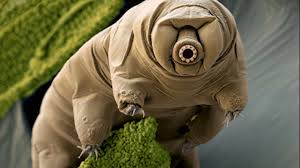
                      Picture credits: Washington post tardigrade which can survive in space

Which makes me an interdisciplinary researcher in Astrophysics and Astrobiology. I know this can be solved by working as an individual with the help of a mooc course and collaborating abroad as a researcher, which I am doing presently. But in order to motivate the next generation the growth is necessary, with a proper coursework and guidance. As a fact my biology knowledge is till 10th grade! so my concern as per help for guidance goes can be understood.

What can be done?

A quote from star trek goes "Space: the final frontier. These are the voyages of the starship Enterprise. Its five-year mission: to explore strange new worlds. To seek out new life and new civilizations. To boldly go where no man has gone before!",  we need to pay attention here. For any new knowledge to grow it has to go under a university structure. As a matter presently astrobiology falls under a domain status, but when it becomes a discipline then things will move forward quickly. Hope this reaches UGC! or there are some astrophysicists from IIA making a progress in this field can recommend government to start a new institute for this area, funds are pretty much necessary.

Any people with start up capabilities can make a difference by starting a astrobiology institute. Which is faster and more of a trend these days! 
<If you are looking for a collaborator you are most welcome to contact me>

Any suggestions about this blog, kindly comment below!


The Adventure of Wholock: When Dr Who meets Sherlock Holmes!

 On a foggy London evening, in a dimly lit study filled with the scent of old books and freshly brewed tea, Sherlock Holmes sat in his armch...